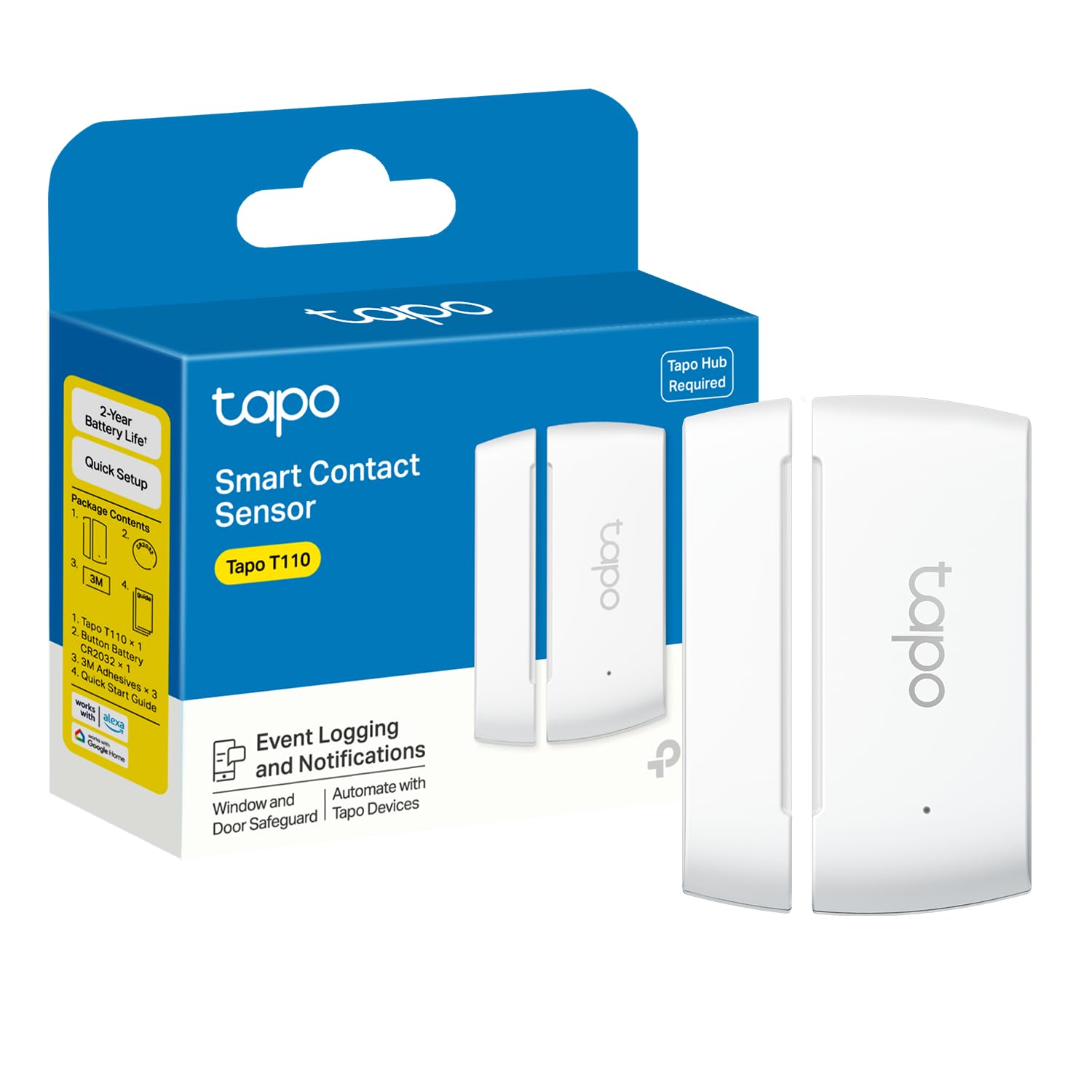
The Tapo Door Sensor Mini (T110) is a compact contact sensor for monitoring doors, windows, and other things that open or close.
This Tapo Door Sensor Mini review focuses on its hub requirement, flexible placement, and role in Tapo automations.
Tapo Door Sensor Review Summary
The quick verdict
700+ ratings
Read Amazon ReviewsTapo Door Sensor Mini (T110)
A practical fit for Tapo users who want door, window, or cabinet alerts and automations, provided they already have or plan to add a compatible hub.
- Requires a Tapo Hub H100, sold separately, and a secured 2.4 GHz Wi-Fi network connection.
- Communicates with the hub using a Sub-1G low-power wireless protocol.
- Monitors open-and-close activity on doors, windows, cabinets, fridges, mailboxes, and similar items.
- Can send real-time phone notifications when a door or window opens unexpectedly.

Pros
- Useful beyond entry points, with potential placements on cabinets, fridges, and mailboxes.
- Can connect an opening event to Tapo alerts and device automations.
Consider before buying
- A Tapo Hub H100 is required and sold separately, so the sensor is not a self-contained purchase.
- The stated battery-life estimate assumes fewer than 30 triggers per day; frequent activity may change replacement timing.
Read the full review summary
The T110’s appeal is its simple job: detect an opening or closing and send an alert or trigger a Tapo Smart Action.
It can be placed on doors and windows, but also on cabinets, fridges, or mailboxes, making it useful for household reminders as well as security routines.
It is best suited to someone building around Tapo who has a Hub H100 or is prepared to buy one separately.
The sensor uses the hub’s Sub-1G low-power wireless connection, and the included CR2032 battery is rated for up to two years under the stated usage assumption of fewer than 30 triggers per day.
The buying factors
Tapo Door Sensor Scorecard
Editorial scores reflect listed features and buyer fit; they are not laboratory measurements or customer ratings.
Placement flexibility
The sensor is intended for doors, windows, cabinets, fridges, mailboxes, and other open-and-close points.
Automation usefulness
It can act as a precondition for Smart Actions, including switching Tapo lights or disabling a Tapo security camera when a door opens.
Setup simplicity
Included adhesive supports mounting on many surfaces, though setup depends on a separately sold hub and secured 2.4 GHz Wi-Fi.
Battery convenience
A single included CR2032 is specified to last up to two years when triggers stay below 30 per day.
System flexibility
Its described automation and connectivity are centered on the Tapo Hub and Tapo devices, so it fits best within that system.
Standalone value
The sensor requires a Tapo hub, which adds a separate purchase and setup step for households without one.
Key Features and Specifications of Tapo Door Sensor
- Requires a Tapo Hub H100, sold separately, and a secured 2.4 GHz Wi-Fi network connection.
- Communicates with the hub using a Sub-1G low-power wireless protocol.
- Monitors open-and-close activity on doors, windows, cabinets, fridges, mailboxes, and similar items.
- Can send real-time phone notifications when a door or window opens unexpectedly.
- Supports Smart Actions, such as turning Tapo lights on or off or disabling a Tapo security camera when a door opens.
- Uses one included CR2032 battery, with up to two years of operation when triggered fewer than 30 times daily.
- Includes 3M adhesive for mounting and allows a gap of up to 15 mm.
Pros and Cons of Tapo Door Sensor
Pros
- Useful beyond entry points, with potential placements on cabinets, fridges, and mailboxes.
- Can connect an opening event to Tapo alerts and device automations.
- The included battery is rated for up to two years under the specified trigger assumption.
- Adhesive mounting avoids making screw holes in many typical installations.
Consider before buying
- A Tapo Hub H100 is required and sold separately, so the sensor is not a self-contained purchase.
- The stated battery-life estimate assumes fewer than 30 triggers per day; frequent activity may change replacement timing.
- The documented Smart Action examples use other Tapo devices, making this most compelling for buyers already using that ecosystem.
Who Should Buy Tapo Door Sensor?
Good fit
Consider the T110 if you want a straightforward way to know when a door, window, cabinet, fridge, or mailbox is opened.
Phone notifications can make it useful for everyday checks, while the sensor’s role as a Smart Action precondition gives it a place in broader Tapo routines.
It makes the most sense when a Hub H100 is already part of your setup or you have budgeted for one.
Before mounting, check that the sensor and magnet can sit within the allowed gap on the chosen surface, and consider how often that spot is likely to trigger relative to the battery-life assumption.
Who should skip it
Skip it if you need a contact sensor that works without a separate Tapo hub, or if you do not want to build around Tapo devices and Smart Actions.
If your intended location opens and closes many times each day, treat the up-to-two-year battery figure as a conditional estimate rather than a guaranteed replacement interval.
How the Tapo Door Sensor Fits a Smart Home
The hub is part of the purchase decision
The T110 requires the Tapo Hub H100, which is sold separately, plus a secured 2.4 GHz Wi-Fi connection for the hub.
That means the sensor’s convenience depends on having the hub in place; if you are starting from zero, account for the extra device and setup before choosing this sensor.
A contact sensor with several everyday uses
Doors and windows are the obvious placements, but the described use cases also include cabinets, fridges, and mailboxes. That broadens its usefulness from entry monitoring to reminders about access or activity around household storage and deliveries.
Automation turns a status change into an action
The T110 can be a precondition for Smart Actions, including turning Tapo lights on or off or disabling a Tapo security camera when a door opens.
These examples make it more than a notification sensor for buyers with compatible Tapo devices; the value depends on whether those routines fit the household.
Mounting and battery expectations
Included 3M adhesive offers a simple way to attach the sensor to many surfaces, and the design allows a gap of up to 15 mm.
Battery operation uses one included CR2032, with up to two years specified at fewer than 30 triggers a day, so a frequently used opening may call for more realistic expectations.
Alternatives to Tapo Door Sensor
Only one supplied option offers a distinct product, and it serves a different security need from a contact sensor. Compare other contact sensors if you want a like-for-like alternative.
Home Security Systems alternative
5,000+ ratings
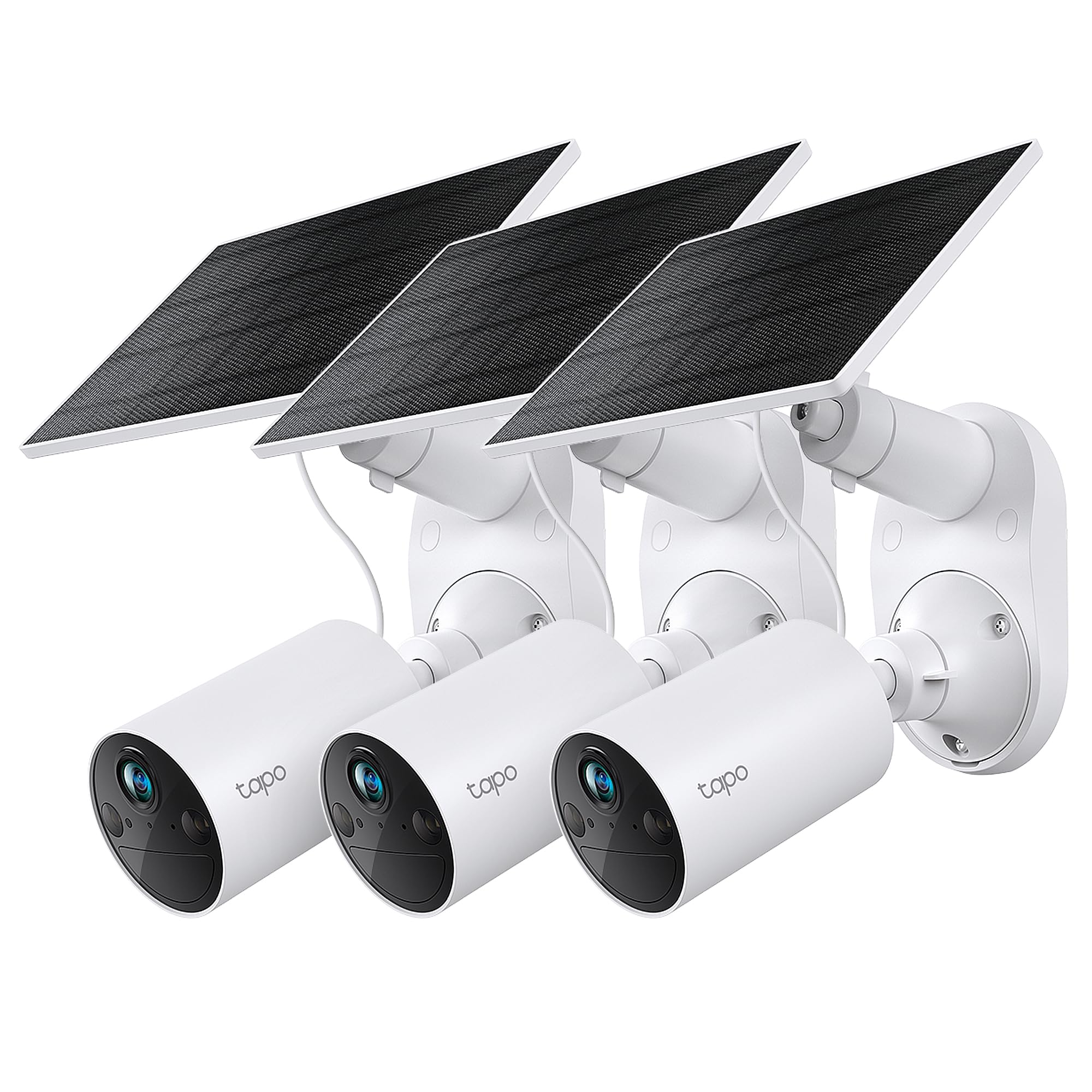
Read Amazon ReviewsTapo SolarCam C402 Kit (3-Pack)
Choose the T110 for discreet open-and-close monitoring and automation at doors or other household points.
The C402 kit is a better fit when the main need is outdoor video coverage across several locations; its cameras serve a different role from a contact sensor.
- The SolarCam C402 kit is a three-camera outdoor security setup with 1080p video, person and motion detection, solar charging, and local microSD or optional cloud storage.
- The Tapo Door Sensor Mini detects whether an opening point changes state and can trigger Tapo alerts or Smart Actions, but it requires a Hub H100.
Is Tapo Door Sensor Worth It?
The Tapo Door Sensor Mini is worth considering for households that already use, or plan to add, a Tapo Hub H100 and want alerts or automations tied to openings.
Its flexible placement, adhesive mounting, and included battery make it a practical small addition to that setup.
The hub requirement is the main buying condition, and the battery-life estimate depends on trigger frequency. If those fit your setup and intended location, the T110 offers a focused way to add contact sensing to Tapo routines.
Your review at a glance
700+ ratings
Read Amazon ReviewsTapo Door Sensor Mini (T110)
A practical fit for Tapo users who want door, window, or cabinet alerts and automations, provided they already have or plan to add a compatible hub.
- Requires a Tapo Hub H100, sold separately, and a secured 2.4 GHz Wi-Fi network connection.
- Communicates with the hub using a Sub-1G low-power wireless protocol.
- Monitors open-and-close activity on doors, windows, cabinets, fridges, mailboxes, and similar items.
- Can send real-time phone notifications when a door or window opens unexpectedly.